
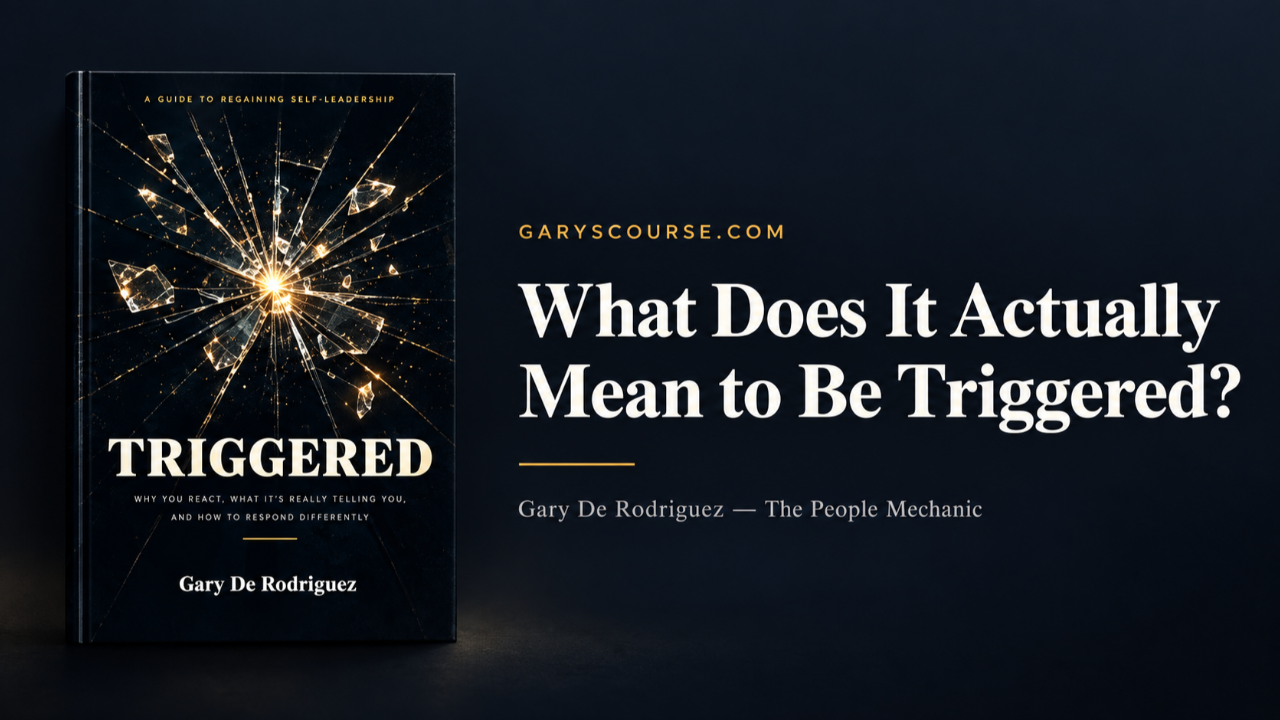
What Does It Mean to Be Triggered? (And Why It Keeps Happening)
Sep 28, 2026Quick answer: Being triggered means something in the present sets off a reaction that is bigger than the moment itself, because of the meaning you attach to it. You are not reacting to the event alone. You are reacting to what it seemed to say about you, the other person, or what happens next, often based on patterns you learned long before this moment.
“Triggered” has become one of those words everyone uses and almost nobody defines. People say it about a rude comment, a tense meeting, or a text that went unanswered. Sometimes it is said as a joke. Sometimes it is said as an accusation.
Underneath the casual use, there is something real and worth understanding, because it explains why so many smart, capable people keep reacting in ways they regret.
It Is Not the Event. It Is the Meaning.
When someone is triggered, the reaction usually looks out of proportion to what happened. That is because it is not really a reaction to what happened. It is a reaction to what the moment meant.
Someone you love glances at their phone while you are talking. What happened? A person looked at a phone. What you experienced may be something else entirely: you are not listening to me, I do not matter. From the outside, the reaction looks excessive. Once you see the meaning, it makes sense.
This is the sequence behind almost every overreaction:
- Event: something happens.
- Meaning: you give it meaning, usually in under a second.
- State: your body and emotions shift.
- Reaction: you act, or you do not.
Most people only ever notice the last step.
Why Do I Get Triggered So Easily?
Meaning has a history. If you grew up somewhere mistakes were ridiculed, a simple correction at work can carry far more weight for you than for someone whose mistakes were treated as ordinary learning. The words are the same. The filter is different.
That is why triggers repeat. The situations change and the people change, but the meaning underneath stays familiar. A new boss, a new partner, a new team, and somehow the same feeling shows up. I wrote more about this in Why Do I Keep Reacting the Same Way?
Being Triggered Is Not a Character Flaw
Many of the reactions people dislike in themselves started out trying to protect something. Defensiveness may be protecting a sense of competence. Silence may be protecting against conflict that once felt dangerous. Control may be trying to reduce uncertainty.
That does not make a reaction okay when it hurts people. It does give you a far better starting point than “I just need to stop doing that.”
How to Stop Overreacting: Where to Start
The goal is not to become someone who never gets triggered. A healthy person is affected by life. The goal is to notice the sequence earlier, so a strong feeling does not automatically become an instruction.
One of the simplest places to start is a single sentence you say to yourself: “This is what I am making it mean right now.” It does not erase the feeling. It creates a little room around it, and that room is often where choice begins. (This is also why “just communicate better” advice so often fails, more on that here.)
Frequently Asked Questions:
1. What does it mean when someone says they are triggered?
It usually means something in the present set off a reaction bigger than the moment, because of the meaning attached to it. The strength of the reaction often comes from past experience, not just the current event.
2. Why do I get triggered so easily?
Usually because a present moment matches a meaning you learned earlier, such as being criticized, left out, or not taken seriously. The more familiar the meaning, the faster the reaction.
3. Is being triggered the same as being oversensitive?
No. Sensitivity to certain moments is often learned in environments where paying close attention mattered. It is not a flaw in who you are. It is a pattern, and patterns can change.
4. Can you stop being triggered completely?
Probably not, and that is not the goal. The realistic goal is to notice the pattern sooner, recover faster, and let fewer strong feelings make your decisions for you.